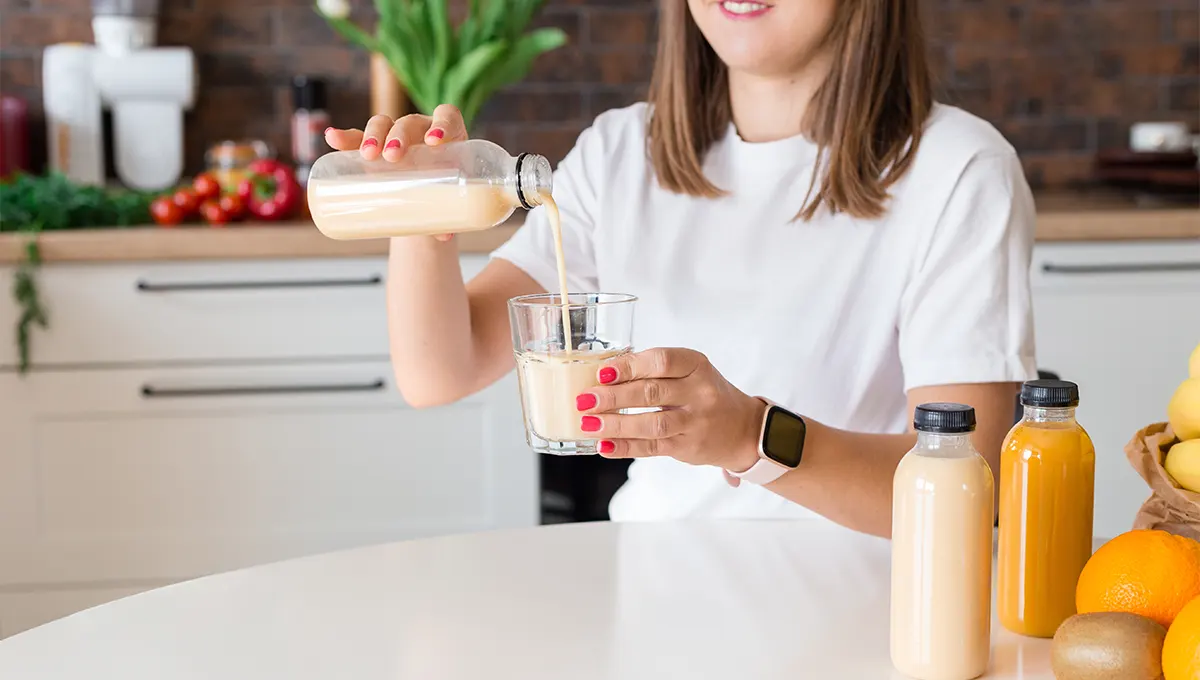
Sugar Free Juice Options for Healthy, Low-Sugar and Refreshing Daily Sips
You Love Juice. But Is It Loving You Back? Halt right there before you pour that glass of "100% Natural." This is what most labels won't reveal to you: a normal 8-oz glass of juice contains practically the same amount of sugar as a can of soda.
According to registered dietitian Beth Czerwony of the Cleveland Clinic, "juice is essentially the sugar of the fruit, minus the fiber." The 2025–2030 Dietary Guidelines for Americans are very clear: even 100% fruit juice must be limited. But what can you drink instead?
This guide will help you understand what "sugar-free juice" really is, what's best for your body, and how to make a smart choice based on the expertise of a dietitian.
No Added Sugar vs. Sugar-Free The Label Trap
This is where most people get tripped up and food brands love it that way. No Added Sugar simply means no additional sweeteners were added. It says nothing about the amount of natural sugars that may be present.
A cup of grape juice may have 36 grams of natural sugars and still carry this label, according to FDA regulations. But the real problem is the fiber difference.
Fiber in whole fruits takes longer to digest. Juice has no fiber; it's digested much faster as quickly as soda. That's why the Glycemic Index is your friend here.
According to Natalie Rizzo, RD and Nutrition Editor of TODAY, "A good rule of thumb is to make sure that if you're choosing a packaged green or vegetable-based drink, it's the first ingredient – not concentrate or 'natural flavors.'"
Best Sugar-Free Juice for Diabetics and Blood Sugar Control
If you are managing diabetes or pre-diabetes, the right diabetic juice is a health strategy, not just preference. The American Diabetes Association recommends prioritizing non-starchy vegetable options. Here are the top picks:
- Cucumber & Celery: The Zero-Sugar Baseline over 95% water, negligible sugar, and near-zero glycemic impact. The safest, most hydrating base any blood-sugar-conscious juice routine can start with.
- Tomato Juice: The Savory Low-GI Swap a GI of just 38 with heart-healthy lycopene per Healthline's nutrition review. Always choose low-sodium; commercial versions can pack 900mg per can.
- Bitter Gourd (Karela) Juice: The Functional Powerhouse contains charantin and polypeptide-p, which mimic insulin action. A 2025 Journal of Ethnopharmacology study showed measurable blood glucose improvements over 12 weeks.
Pro Tip: Mix bitter gourd with celery and lemon. A small 4-oz morning serving delivers the benefit without the overwhelming bitterness.
Top Store-Bought Sugar-Free Juice Brands Worth Trusting
The cold-pressed juice market is growing, and some brands have truly earned their health claims. Here’s what makes the grade:
USDA organic, cold-pressed, no added sugars. Julie Balsamo, RDN, dietitian, highlights this one as having gut-loving ingredients including spirulina, chlorella, and ginger. Greens dominate the list.
Evolution Fresh (Essential Greens)
HPP processing, which preserves heat-sensitive nutrients. Spinach, cucumber, and romaine lead the list. Only 50 calories per serving, no fruit juice added.
Lisa Young’s go-to drink every day. Low sugar, high in lycopene and Vitamin C, and truly filling. The low sodium makes it heart-safe.
Fruit cocktails, anything labeled from concentrate, and anything with apple or grape juice leading the list. These are sugar delivery systems masquerading as health drinks.
According to The Ingredient Inspector's December 2025 analysis report, many popular green drink brands contain high levels of natural sugars, hidden behind a green façade.
Green Detox Juice and Weight Loss What Actually Works
Green juice for weight loss is one of the most searched health-related topics at the moment, and one of the most misunderstood. Let us cut straight to what the evidence supports.
The best green juice recipe for weight loss follows the 80/20 Rule: 80% non-starchy veggies like kale, cucumber, celery, or spinach, and 20% low-sugar fruit like green apple or a handful of berries.
This provides 80-120 calories per 16-oz serving while delivering a potent dose of vitamins, minerals, and antioxidants.
For metabolism boost, add ginger and lemon. Ginger has active bioactive compounds called gingerols and shogaols, which have been associated with small increases in thermogenesis and appetite suppression, as per clinical studies. Lemon provides vitamin C, which has fat metabolism benefits without the added sugars.
Safety Note: Juice cleanses, or drinking juice as the sole source of nutrition, are not supported by the Academy of Nutrition and Dietetics or the ADA. Juice should be used as a supplement, not a replacement, for a healthy diet.
Juice for Immunity Without the Sugar Spike
Most people reach for OJ when they want a juice for immunity but that 8-oz glass delivers 21 grams of sugar and a GI of around 50. Smarter immunity juicing means getting the same micronutrients from lower-sugar sources.
- Vitamin C: Red bell peppers contain 3x the Vitamin C of oranges per gram with a fraction of the sugar.
- Anti-inflammatory support: Fresh turmeric and ginger provide curcumin and gingerols well-documented immune modulators.
- Electrolyte base: Unsweetened natural coconut water (look for brands like Harmless Harvest or Vita Coco) provides potassium and natural electrolytes at around 45 calories per cup without the added sugars found in flavored sports drinks.
Combine bell pepper, spinach, ginger, turmeric, and unsweetened coconut water for a genuinely functional immunity shot that skips the sugar spike entirely.
3 Easy DIY Sugar-Free Juice Recipes
Recipe 1: The Daily Green (Weight Loss)
Ingredients: 2 Kale leaves, 1 Cucumber, 3 Celery stalks, 1-inch Ginger, Juice of 1 Lemon.
Process: Insert all the ingredients into the juicer. Mix in the juice of 1 lemon. Enjoy over ice.
Calories: ~75, Total sugars: 6g, GI: ~18.
Recipe 2: The Red Guard (Diabetic-Friendly)
Ingredients: 4 Medium Tomatoes, 3 Celery Stalks, Small Bunch of Fresh Parsley, Pinch of Black Pepper.
Process: Insert all the ingredients into the juicer. Mix in black pepper. Black pepper contains piperine, which increases the bioavailability of lycopene.
Calories: ~65, Total sugars: 9g, GI: ~38.
Recipe 3: The Tropical Hydrator (Immunity)
Ingredients: 1 Cup Unsweetened Coconut Water, 1/4 Cup Muddled Raspberries, Juice of 1 Lime, 1/2-inch Fresh Turmeric.
Process: Muddle the raspberries, add coconut water, lime juice, and turmeric. Mix and enjoy chilled. No juicer required.
Calories: ~70, Total sugars: 10g, GI: ~40.
Bottom Line
Sugar-free juice is not only not a myth, it’s also about making the choice between vegetables and fruit, reading beyond the marketing, and understanding how your body works with liquid sugars.
Whether you are working to control blood sugars, achieve weight loss, or just incorporate more nutrients into your diet, you do have options available to you.
Remember, the golden rule: in doubt, eat the fruit, and in doubt, drink the greens. Want to take it to the next level?
Consult a registered dietitian to create a juice plan that fits your unique health needs and objectives. Your gut, blood sugars, and energy levels will thank you.
FAQ’s
- Which juice has no sugar?
Cucumber, celery, and bitter gourd juices contain negligible natural sugar making them the closest to truly sugar-free options available.
- Which juice is good for heart palpitations?
Tomato juice and coconut water are excellent choices rich in potassium and magnesium, both essential for healthy heart rhythm.
- What juice can I drink that has no sugar?
Stick to vegetable-based juices cucumber, celery, spinach, or tomato. Always check labels; greens should be the first listed ingredient.
- Is sugar-free juice ok for diabetics?
Yes, when it is vegetable-based and low-GI. Cucumber, celery, and bitter gourd juice are dietitian-recommended choices for blood sugar management.